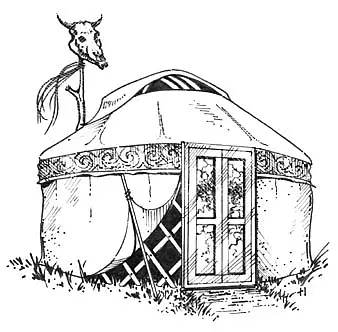
Opinions still differ on the prehistory of the Magyars. The original homeland of the Hungarians, called Magna Hungaria in the Middle Ages, was in all probability in the region where the rivers Volga and Kama meet, on the European side of the Ural Mountains. Some of the old Hungarian tribes left this territory around 700 AD. According to the most widely accepted view, the first Hungarian tribes appeared in the Carpathian Basin in the second half of the 9th century. Before then the territory was inhabited by Avars, Huns and Slavic peoples. The Conquest, under the leadership of Prince Árpád, was completed in 896.
After 955 Prince Géza accepted Christianity and began to introduce the Western social system. In 1000 King Saint Stephen (Szent István), the son of Géza, received a crown from the Pope; he thus became an independent sovereign and could consolidate his position in the country. This was the birth of the Kingdom of Hungary. In 1241 the Mongols (Tartars) ravaged almost the whole country. The work of rebuilding was undertaken by King Béla IV, who is often referred to as the second founder of the state. Under the Franco-Italian House of Anjou, Charles Robert was able to create economic stability.
At the beginning of the 15th century the Ottomans appeared on the southern border of the country. János Hunyadi (John Hunyadi) fought effectively against the Ottomans in several battles. His son Matthias (Matthias Corvinus) was a typical Renaissance ruler: in his humanist court in Buda and Visegrád, Renaissance art and culture flourished for the first time outside Italy. The renewed Ottoman attacks, however, brought catastrophe. After the tragic defeat at Mohács in 1526 the unity of Hungary was shaken, and Buda was captured by the Ottoman Turks in 1541. The Ottoman occupation lasted 150 years. In 1686 the whole country was liberated by a successful crusade with allied Austrian troops.
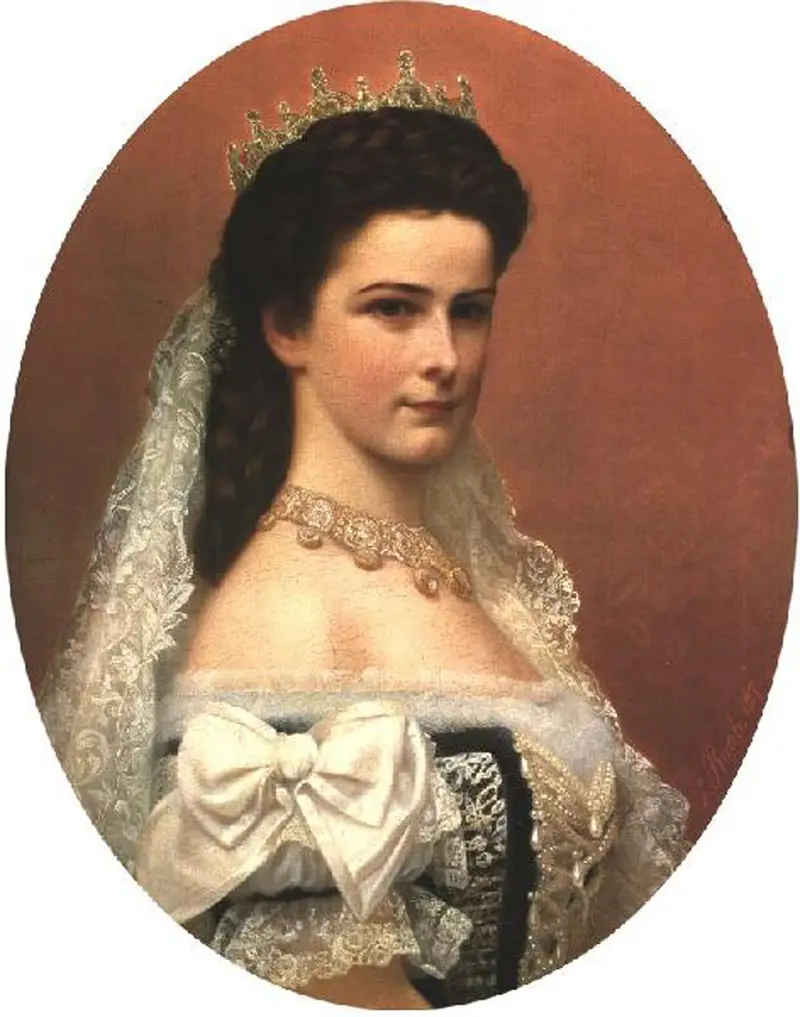
The arbitrary rule of the Habsburgs, however, soon led to discontent, which culminated in Rákóczi’s War of Independence. But the Hungarians did not gain complete freedom from Vienna. The spirit of nationalism awakened again in Hungary and was embodied in a reform movement, whose two prominent figures were István Széchenyi and Lajos Kossuth, which led to the revolution of 1848. The young Emperor Franz Joseph I attacked the country and had to ask the Russian Tsar for help, which was given, and the revolution was suppressed. Years of terror followed, but in 1867 the Austro-Hungarian Monarchy was established, and this so-called “Compromise” paved the way to unprecedented economic growth. By the turn of the century the Austro-Hungarian Monarchy had become one of the major powers of Europe.
After World War I, as a result of the dictated peace of Trianon, Hungary was deprived of two thirds of its territory. Hungarian policy between the two wars, during the Horthy era, strove to regain the lost territories, which was partly achieved. The price was that Hungary had to enter World War II on the side of Germany in 1941. Although Hungary retained its sovereignty until the spring of 1944, when the German occupation took place, as a losing party it had to swallow severe sanctions after the devastation of the war.
After the war the fragile Hungarian democracy was torn down by the communists in 1948. The tormented population revolted against despotism on 23 October 1956, but the Soviets, taking advantage of the international situation, brutally crushed the revolution. Power was seized by János Kádár, who, after bloody reprisals, took steps towards a relatively consolidated political and economic system within the framework of the communist dictatorship. From 1968 onwards economic reforms were implemented and the standard of living improved slightly. This made possible the round-table discussions between the ruling party and the opposition in 1989, at which the rules of the transition to a multi-party democracy were laid down. Following the peaceful transition and the first free parliamentary elections in 1990, Hungary turned a new page in its development, amid economic and social tensions.