Destinations
Destinations
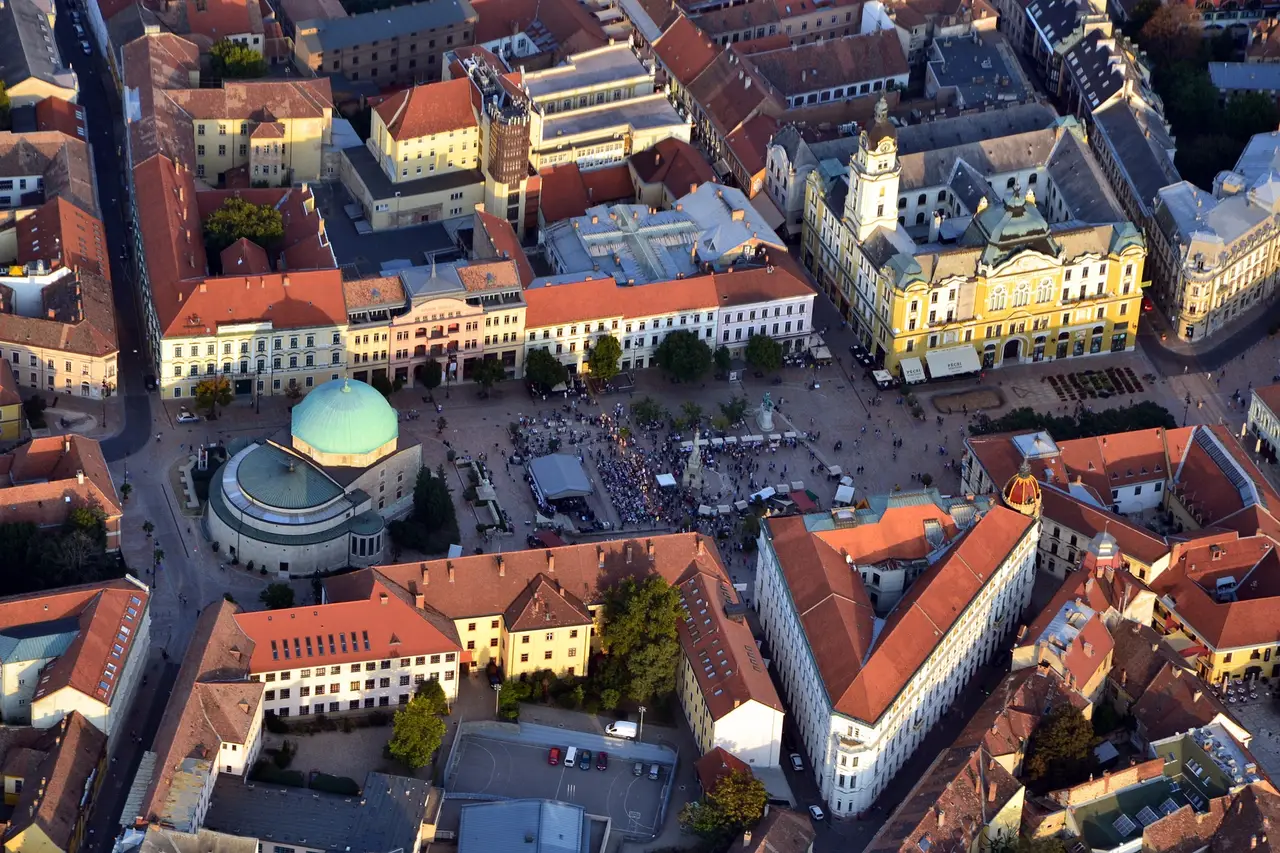
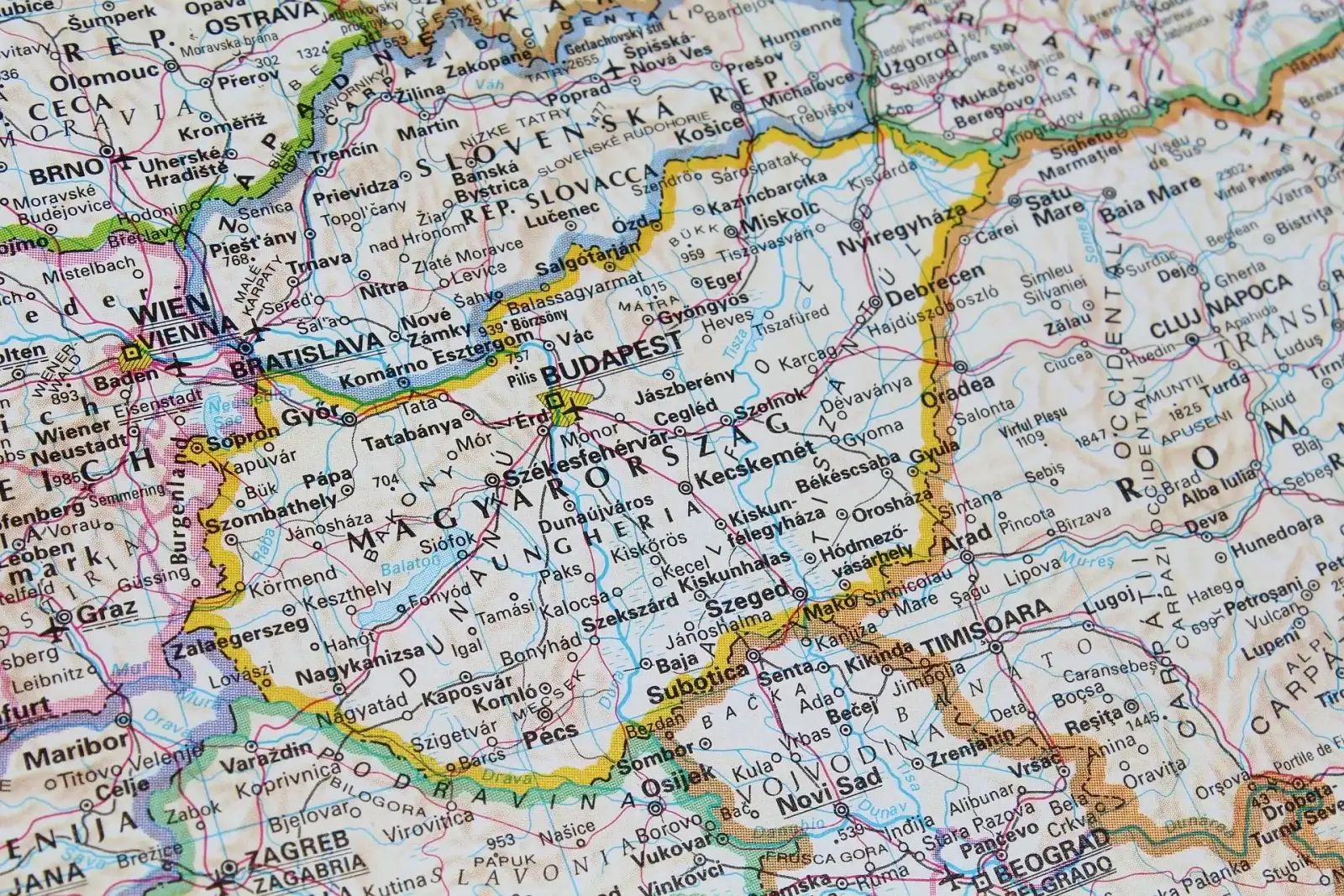
Pécs, situated in the south of Hungary at the foot of the Mecsek hills, radiates a truly Mediterranean atmosphere thanks to its climate, its flora and its narrow, rambling streets. With its rich cultural life, theatre, museums and festivals, the town is a significant cultural centre of the region and of the whole country.
The town was founded by the Romans at the beginning of the 1st century AD. By the 4th century Sopianae had become a flourishing provincial capital and a significant centre of early Christianity. Saint Stephen, the first Hungarian king, founded a bishopric here in 1009, and Hungary’s first university started to operate here in 1367. The architectural monuments of the 150 years of Turkish occupation, the mosques, the Turkish bath and the tomb of Pasha Idris, can still be seen.
In the cemetery of ancient Sopianae our 4th-century Roman forebears built churches, chapels and mausoleums with tombs beneath. In the course of the archaeological excavations, which have been going on for more than 200 years, hundreds of graves richly supplied with grave goods have been found around the tombs. Based on the Christian symbols decorating the grave goods and the biblical frescoes of the buildings, the cemetery of Sopianae is considered an early Christian cemetery. It holds the largest number of frescoed cemetery buildings not just in Hungary but in the whole of Europe, and for this reason this early Christian group of buildings is regarded as an unrivalled set of cultural monuments.
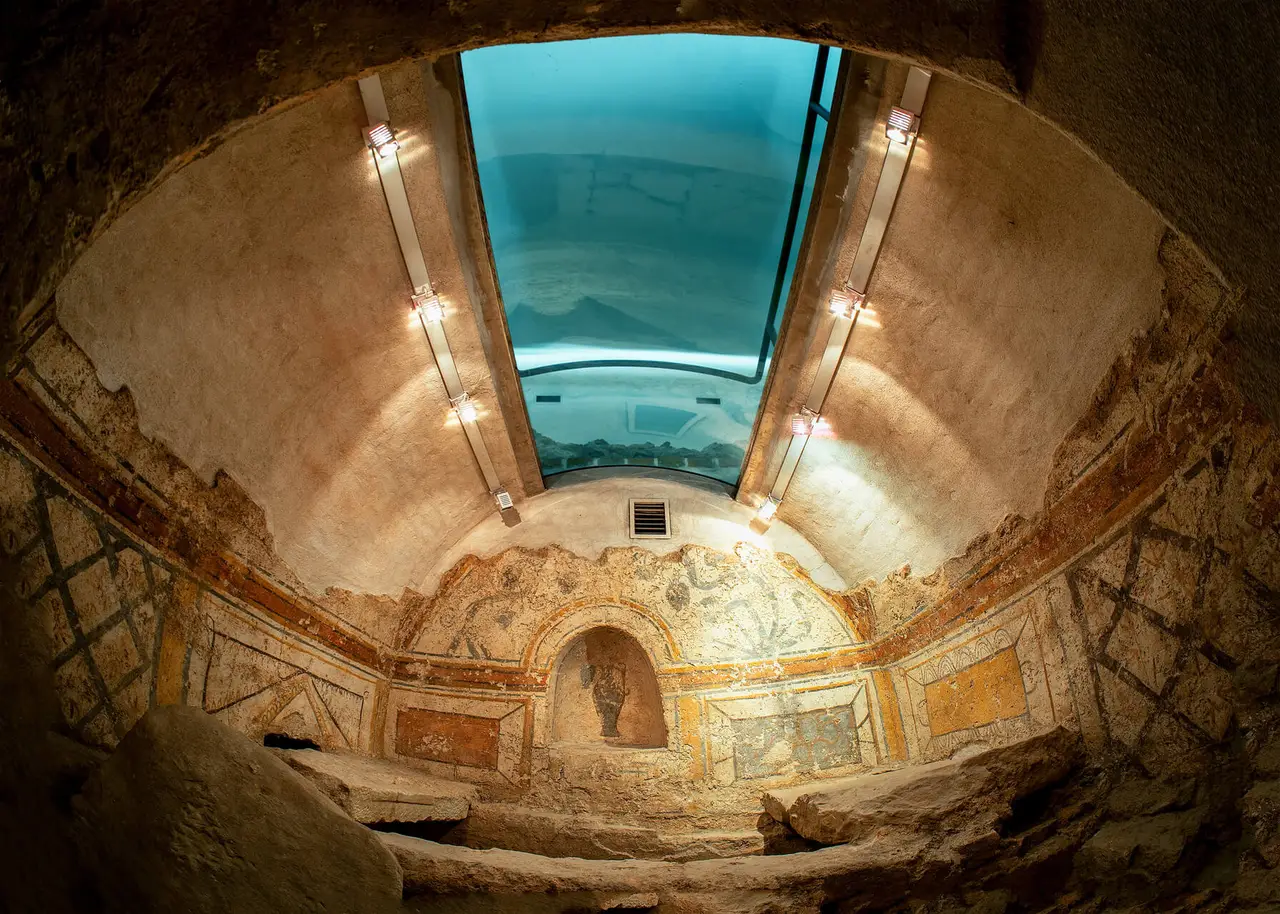
There is a tomb under the large chapel. There was no direct architectural connection between the level of the cubiculum (tomb) with its painted walls and the chapel; both had (and still have) a separate entrance. The northern and eastern walls of the tomb are decorated with biblical frescoes: Adam and Eve in Paradise with the tree and the snake, and the prophet Daniel thrown into the lions’ den. On the eastern wall there is a fragment of the Christ monogram and a seated figure in white clothes. A carved white marble sarcophagus from the 3rd century stands in front of the southern wall. The wall areas between the figures are decorated with paintings imitating marble and with plant motifs.
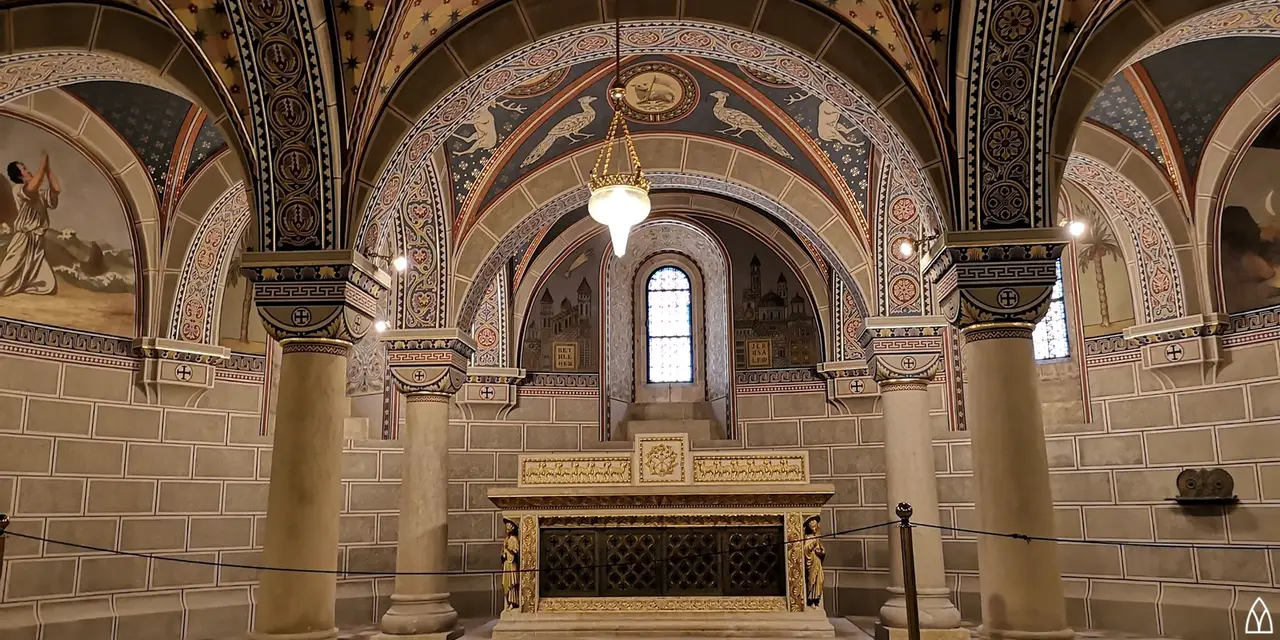
In this two-storey building the whole undamaged internal wall surface of the barrel-vaulted tomb is covered with frescoes. On the wall opposite the entrance the apostles Peter and Paul point at the Christ monogram, symbolising the presence of Jesus. On the side walls the stories of Adam and Eve, Noah, the three kings, Jonah, and the Virgin Mary with the child Jesus are depicted. On the vault, decorated with rich plant and animal ornamentation (doves, peacocks), four portraits in circular frames can be seen, perhaps of those who were buried here. The tomb and two smaller, unpainted buildings will open to the public after the completion of the restoration work.
There are many other underground tombs that you can visit.